Anglican Theology: Scripture, Tradition, and Reason
The Anglican Tripod

The Anglican tradition, while deeply rooted in the historic Christian faith, is also known for its distinctive approach to theological authority. This approach is often described using the metaphor of a "three-legged stool," commonly referred to as the "Anglican Tripod." This tripod comprises three essential and interconnected sources: Scripture, Tradition, and Reason. This paper will explore the concept of the Anglican Tripod, tracing its historical development, defining its key components, examining its characteristics and implications, and considering the criticisms and challenges it faces in the contemporary context of a global and increasingly diverse communion.
Defining the Anglican Tripod: The Three Legs
Scripture
At the apex of the Anglican authoritative hierarchy stand the Sacred Texts of the Holy Bible. Anglicans affirm that Scripture is the primary and normative source of God's revelation, containing "all things necessary for salvation." It serves as the ultimate standard by which all Christian teaching and reflection must be judged. While the other two legs contribute to its interpretation and application, Scripture holds a unique and supreme place, embodying the principle of prima scriptura—first Scripture. It is considered norma normans non normata, meaning it is the norm that norms (sets the standard for) but is not normed (is not subject to a higher standard itself).
Tradition
Tradition refers to the accumulated wisdom, practices, and theological teachings of the Church throughout its two-millennia history. This rich heritage includes the ecumenical creeds (such as the Nicene and Apostles' Creeds), the sacraments, the patterns of liturgy and worship, the writings of early Church Fathers, and the ongoing discernment of God's presence and activity within the Christian community across generations. Tradition is not a static, unchanging repository; rather, it is understood as a living, dynamic stream that transmits and clarifies the faith. It serves to interpret Scripture, ensuring that Christian faith is passed down consistently and understood in continuity with the Church universal and through time.
Reason
Finally, Reason constitutes the third essential leg. This refers to the human capacity to think critically, discern truth, and apply understanding to matters of faith and life. It encompasses not only logical thought but also intuition, moral discernment, and the insights gleaned from human experience. Reason plays a crucial role in interpreting both Scripture and Tradition, allowing for thoughtful engagement with complex theological questions. It also provides a framework for adapting Christian principles to new circumstances, while remaining faithful to core beliefs. Importantly, Anglicanism identifies this as "redeemed reason"—a God-given faculty that exists in tension, being both fallen and imperfect due to sin, and yet capable of being illuminated by the Holy Spirit. Thus, reason is to be exercised humbly and in dependence on God, never attempting to usurp divine revelation but rather to comprehend and apply it thoughtfully.
Richard Hooker's Influence: The Historical Roots
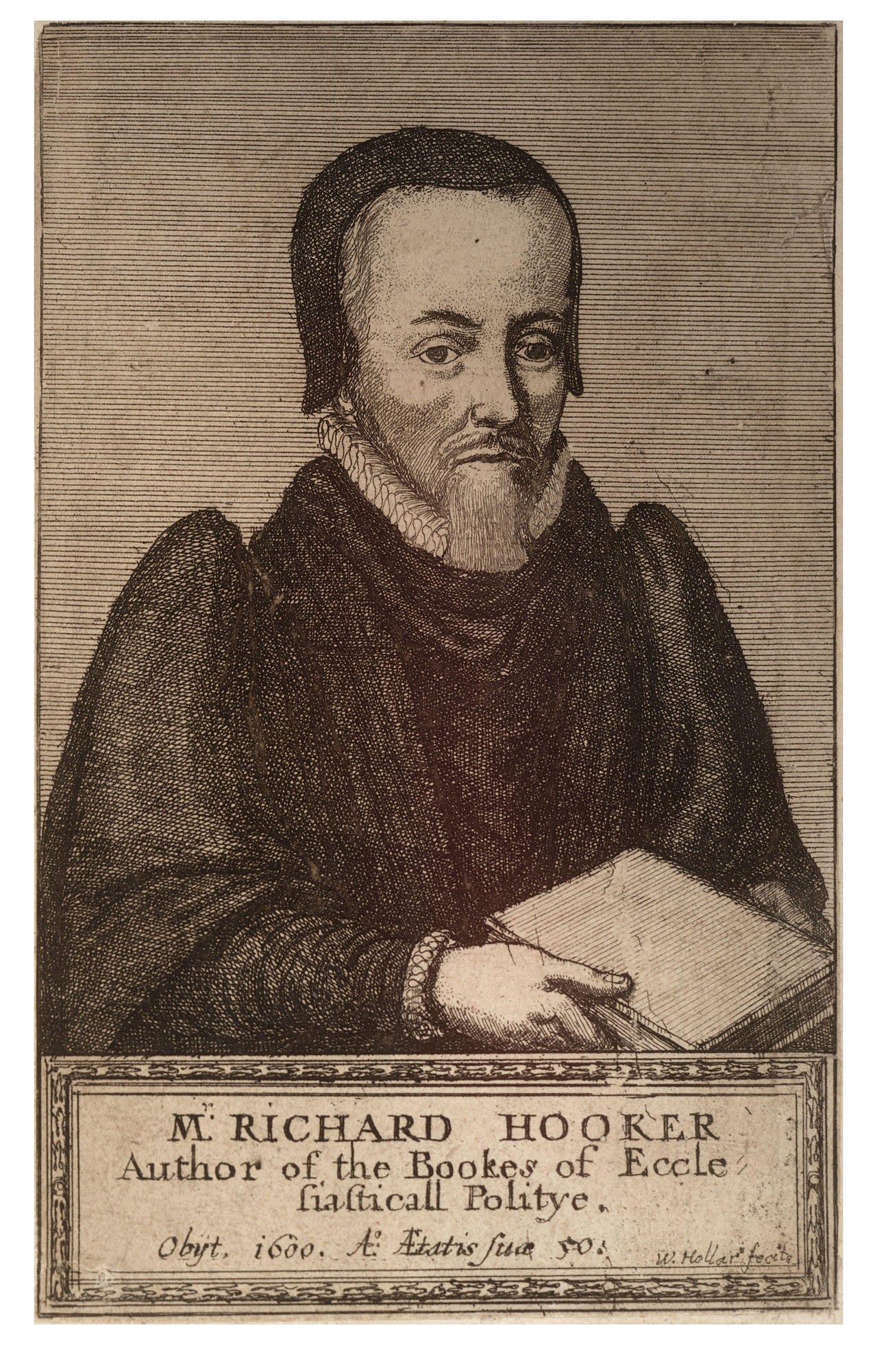
While the "Anglican Tripod" as a specific phrase gained currency in the 19th century, its conceptual foundation is unequivocally rooted in the monumental theological work of Richard Hooker (c. 1554-1600). In his seminal eight-book treatise, Of the Laws of Ecclesiastical Polity, Hooker systematically defended the established practices and governance of the Church of England against the rigorous criticisms of Puritan reformers who advocated for a more strictly biblical, presbyterian model.
Hooker's genius lay in his nuanced articulation of how authority operates within the Church. He argued that while Scripture contained "all things necessary to salvation," it did not explicitly prescribe every detail of church order or governance. For such matters, Hooker contended, God had given humanity the gift of reason, which could discern principles from natural law and human experience. Furthermore, he emphasized the "voice of the Church"—or tradition—as a vital guide, reflecting the collective wisdom and accumulated experience of the faithful throughout history.
Hooker's layered and interdependent approach, recognizing distinct yet complementary roles for each source, laid the intellectual groundwork for what would later be formalized as the Anglican Tripod.
Characteristics and Implications of the Anglican Tripod
The Anglican Tripod is far more than a mere listing of authoritative sources; it embodies several defining characteristics and has profound implications for Anglican theology and practice.
Interdependence and Balance
The image of a three-legged stool perfectly the interdependence and balance intended by this framework. If any one leg is missing or given undue emphasis at the expense of the others, the stool becomes unstable, leading to a distorted understanding of faith. Scripture, Tradition, and Reason are meant to uphold, critique, and illuminate each other, fostering a dynamic and nuanced approach to theological understanding. This prevents rigid literalism (without reason or tradition), uncritical adherence to past practices (without scriptural or rational evaluation), or subjective individualism (without the collective wisdom of the Church or biblical grounding).
The Via Media (Middle Way)
The Anglican Tripod is often seen as the intellectual cornerstone of Anglicanism's "via media," or "middle way." This theological approach seeks to navigate a path between the perceived extremes of Roman Catholicism (which historically gave more equal weight to Scripture and Tradition, sometimes seen by Protestants as elevating tradition unduly) and certain forms of radical Protestantism (which strictly adhered to sola scriptura, sometimes to the exclusion of historical continuity or reasoned inquiry). The tripod allows Anglicans to affirm the supreme authority of Scripture, while also valuing the historical continuity and liturgical richness of the Church, and embracing intellectual inquiry and critical thought.
Continual Discernment
This balanced approach naturally encourages a posture of continual discernment and theological reflection. Anglicans understand that grappling with God's will and applying Christian truth to new contexts is an ongoing process within the community of faith. It discourages simplistic answers and invites thoughtful, prayerful engagement with complex questions, relying on the combined wisdom offered by all three legs.
Role of Formularies
The practical application of the Anglican Tripod is tangibly expressed through its formularies, most notably the Book of Common Prayer (BCP). The BCP has been described as 'the Bible arranged for worship,' as it intentionally structures liturgical services, prayers, and sacramental rites around the reading, preaching, and living out of Scripture. The BCP is not merely a service book; it is a profound theological document that embodies and transmits Anglican tradition through its liturgy, prayers, and sacramental rites. It provides a common framework for worship and belief that both reflects and shapes Anglican identity. Complementary formularies, such as the Thirty-Nine Articles of Religion and the Homilies, further articulate the historical development of Anglican doctrine, serving as important guides for interpreting Scripture through an Anglican lens while also reflecting reasoned theological conclusions.
Application to Moral Theology and Social Issues
A significant implication of the Anglican Tripod lies in its application to moral theology and contemporary social issues. Rather than relying solely on a single proof-text from Scripture, Anglicans engage in a multi-faceted discernment process rooted in Scripture and Tradition. This involves asking: What do the biblical texts say, understood in their original context and meaning? How has the Church historically understood and applied these principles (Tradition)? Reason, informed by contemporary knowledge, scientific understanding, and ethical reflection, contributes to discerning how to apply these principles faithfully and justly in the present context. This approach seeks to uphold core Christian teaching in the face of complex ethical dilemmas, even if it sometimes leads to internal debates within the communion.
Criticisms and Challenges of the Anglican Tripod
While foundational and widely embraced, the Anglican Tripod is not without its criticisms and presents ongoing challenges, particularly in a diverse global communion.
Vagueness/Ambiguity
One common criticism is that the very balance and emphasis on "discernment" can lead to a perceived vagueness or ambiguity in Anglican theological positions. Critics argue that the tripod's flexibility can sometimes result in a lack of clear doctrinal statements or a "theological sheepishness," making it difficult to define Anglican identity precisely on certain issues.
Prioritization Debates
Despite the general acceptance of prima scriptura, debates can still arise over the precise weight or priority given to each leg of the tripod in specific theological or ethical dilemmas. When Scripture, certain traditions, or contemporary reason seem to pull in different directions, determining which leg should have precedence in a particular context can become a source of contention.
"Experience" as a Fourth Leg
Certain theologians, especially those within the Wesleyan tradition (which has its roots in Anglicanism), propose the inclusion of "experience" as a fourth leg, forming the "Wesleyan Quadrilateral." While "experience" is often implicitly incorporated into the Anglican understanding of "Reason" (especially in terms of lived experience and discerning God's activity in the world), its explicit exclusion from the formal Anglican Tripod can be a point of discussion for those who seek to formally acknowledge the role of personal and communal spiritual experience in theological reflection.
Challenges in a Global Communion
The Anglican Tripod, in practice, faces a crisis of authority within a global Communion where theological orthodoxy is no longer consistently upheld. The Church of England (along with the Episcopal Church, the Anglican Church of Canada, and others), having departed from historic Christian teaching, exemplifies the profound disagreements that arise from differing interpretations of Scripture and Tradition. This raises serious questions about the possibility of maintaining meaningful communion between orthodox and heterodox provinces, as the Tripod's flexibility is exploited to justify departures from core Christian doctrine.
Conclusion
The Anglican Tripod, rooted in the theological insights of Richard Hooker, remains a central, defining, and enduring framework for understanding Anglican identity, doctrine, and practice. It offers a compelling model for theological reflection, emphasizing the balanced and dynamic interplay of Scripture, Tradition, and Reason. This approach has enabled Anglicanism to navigate a "middle way" between extremes, fostering both fidelity to core Christian teaching and a willingness to engage thoughtfully with new contexts and challenges. While the Tripod faces ongoing criticisms and challenges, particularly in a global communion increasingly characterized by heterodoxy and the abandonment of historic, biblical Christianity, it remains a valuable framework for those provinces that seek to uphold core Christian doctrine in a complex and ever-changing world.